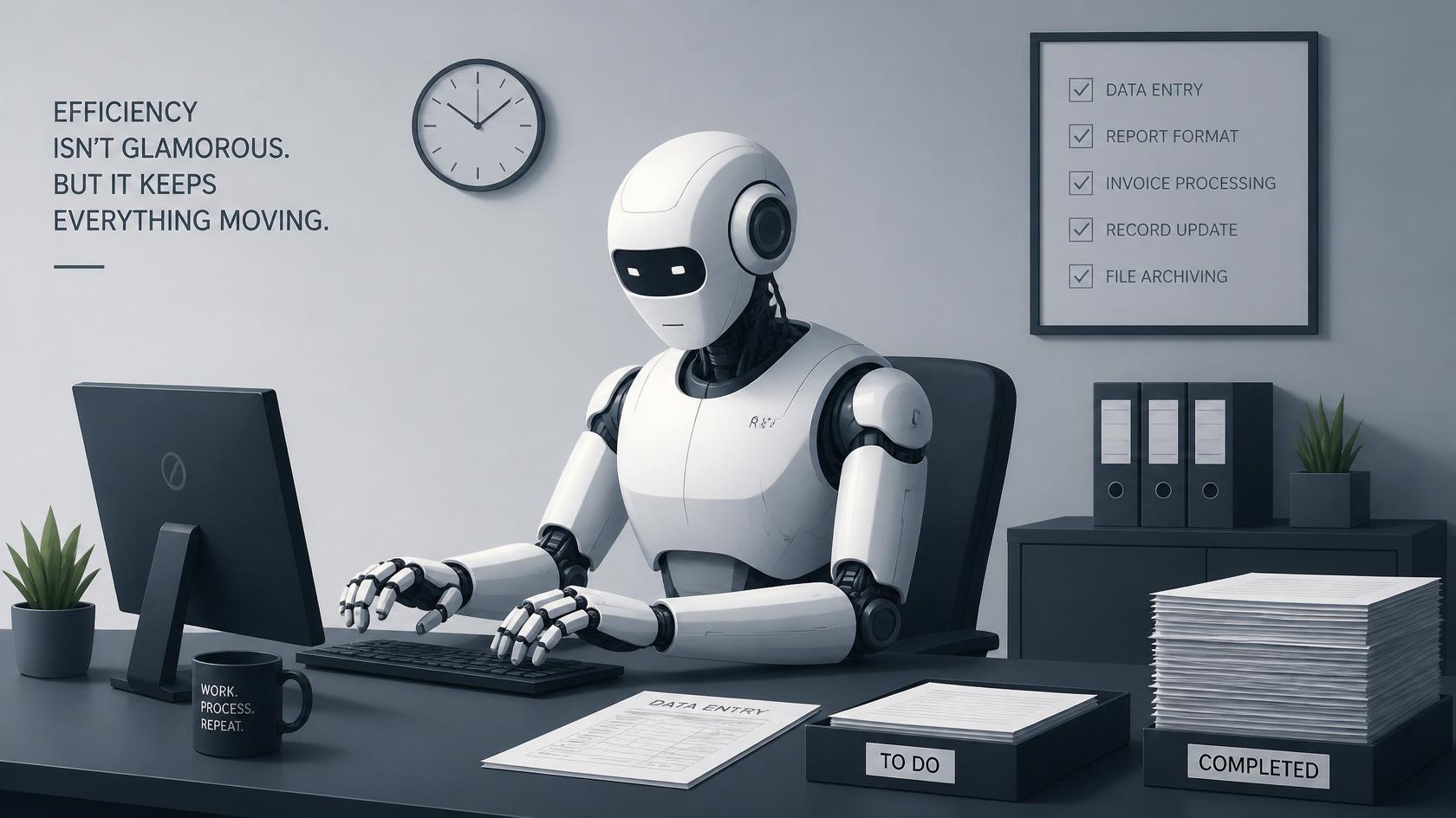
Artificial intelligence is transforming the way organizations operate, making AI Business automation one of the most searched topics for business owners, entrepreneurs, and managers today. AI business automation involves using artificial intelligence technologies to perform repetitive, data-driven, and time-consuming tasks with minimal human intervention. Unlike traditional automation, which follows fixed rules, AI-powered systems can analyze data, recognize patterns, learn from experience, and make intelligent decisions in real time. Technologies such as machine learning, natural language processing (NLP), large language models (LLMs), computer vision, and robotic process automation (RPA) enable businesses to automate everything from customer service and marketing to inventory management andfinancial reporting. As AI tools become more affordable and accessible, companies of every size can leverage them to improve efficiency and remain competitive.
One of the biggest advantages of learning How to Automate Your Business with AI is the significant boost in productivity and operational efficiency. AI can handle repetitive administrative tasks such as responding to customer inquiries, scheduling appointments, processing invoices, managing emails, generating reports, and analyzing business data much faster than manual processes. This allows employees to focus on strategic activities that require creativity, problem-solving, and human judgment. Businesses that successfully implement AI automation often experience reduced operating costs, fewer errors, faster decision-making, and improved customer satisfaction. Whether you operate a small startup or a large enterprise, AI-powered automation can streamline workflows, increase profitability, and create a more agile business environment.
Understanding which business processes are best suited for automation is the first step toward building a successful AI strategy. Routine, repetitive, and data-intensive tasks generally offer the highest return on investment because they consume valuable employee time while requiring little creative input. Common examples include customer support through AI chatbots, email marketing automation, lead generation, CRM updates, payroll processing, inventory tracking, document management, social media scheduling, and sales forecasting. By identifying these opportunities, businesses can gradually introduce AI solutions without disrupting existing operations. Starting with a few high-impact workflows enables organizations to measure results, optimize performance, and expand automation across other departments as confidence grows.
Business Processes You Can Automate with AI
One of the easiest ways to understand AI business automation is to start by identifying the tasks that are repetitive, time-consuming, and follow the same pattern every day. These are the activities that AI can perform quickly and accurately, allowing you and your team to focus on growing the business instead of getting stuck in routine work. For example, AI can automatically answer common customer questions through chatbots, schedule appointments, send follow-up emails, manage social media posts, qualify sales leads, generate marketing content, process invoices, organize documents, and track inventory levels. AI-powered tools can also analyze customer behavior, create detailed reports, and provide valuable insights that help business owners make smarter decisions. Whether you run a small online store, a consulting firm, or a large company, automating these everyday tasks can save hours of work each week, reduce costly mistakes, improve customer satisfaction, and increase overall productivity.
The key to successfully implementing an organisation’s business automation is to start small rather than trying to automate everything at once. Begin by choosing one or two business processes that consume the most time, such as customer support or email management, and use AI tools to simplify those tasks. Once you become comfortable with the technology and start seeing measurable results, you can gradually expand AI automation into other areas like marketing, sales, accounting, human resources, and operations. This step-by-step approach makes AI easier to adopt, minimizes disruption to your business, and allows you to maximize your return on investment. By focusing on the right workflows first, even beginners can successfully automate their business with AI and build a more efficient, scalable, and competitive organization.
The Top AI Automation Tools to Automate Your Business with AI
Choosing the right software is one of the most important steps when learning how to Automate Your Business with AI. While there are hundreds of AI-powered platforms available today, most businesses only need a few reliable tools to automate their daily operations. The best AI automation tools help businesses save time, reduce manual work, improve customer service, and increase productivity without requiring advanced technical skills. Whether you want to automate customer support, create marketing content, manage projects, or connect multiple business applications, there is an AI solution designed for your needs. Below are five of the most effective AI automation tools that businesses of all sizes can use to streamline operations and accelerate growth.
1. ChatGPT
Best for Content creation, customer support, business communication, and research. ChatGPT is one of the most versatile AI assistants available. Businesses use it to write emails, generate blog posts, create marketing copy, answer customer questions, draft proposals, summarize reports, and automate internal documentation. It can also be integrated into customer service workflows to provide instant responses and improve employee productivity.
2. Zapier
Best for: Connecting business apps and automating repetitive workflows. Zapier AI allows businesses to connect thousands of applications without writing code. For example, it can automatically save email attachments to cloud storage, send leads from a website to a CRM, notify sales teams through Slack, or create invoices when a customer makes a purchase. It is an excellent solution for businesses looking to eliminate repetitive manual tasks.
3. Microsoft Copilot
Best for: Office productivity and document automation. Microsoft Copilot integrates directly with Word, Excel, Outlook, Teams, and PowerPoint. It helps employees draft documents, summarize meetings, analyze spreadsheets, generate presentations, and manage emails more efficiently. Businesses already using Microsoft 365 can significantly improve productivity by incorporating Copilot into their daily workflows.
4. Hubspot AI
Best for: Marketing, sales, and customer relationship management. HubSpot AI combines customer relationship management with artificial intelligence to automate lead generation, email marketing, customer segmentation, content creation, and sales follow-ups. It helps businesses nurture potential customers, improve marketing campaigns, and close more sales while reducing manual work.
5. Make (formerly Integromat)
Best for: Advanced workflow automation. Make enables businesses to build powerful automated workflows between different software platforms using a visual drag-and-drop interface. Companies use it to synchronize customer data, automate order processing, manage inventory, generate reports, and streamline multi-step business processes. It is particularly useful for businesses with more complex automation requirements.
Selecting the right platform depends on your business goals and existing workflows. If your focus is creating content and improving communication, ChatGPT is an excellent choice. Businesses seeking to automate routine tasks across multiple applications can benefit from Zapier AI or Make, while Microsoft Copilot is ideal for organizations heavily invested in Microsoft 365. HubSpot AI is best suited for companies looking to automate marketing, sales, and customer relationship management. By choosing the right combination of tools, businesses can successfully Automate Your Business with AI, improve operational efficiency, reduce costs, and create more time to focus on innovation and growth.
How to Successfully Implement AI Automation in Your Business
Successfully learning how to Automate Your Business with AI goes beyond choosing the right software—it requires a clear strategy and a step-by-step implementation plan. Rather than attempting to automate every aspect of your business at once, start by identifying repetitive tasks that consume the most time, such as customer support, email management, data entry, or invoice processing. Set measurable goals, select AI tools that integrate with your existing systems, and begin with a small pilot project. This approach allows you to evaluate performance, train your employees, and refine your workflows before expanding AI automation across other departments. Regularly monitoring key performance indicators (KPIs) such as time saved, cost reduction, customer satisfaction, and productivity will help you measure the success of your AI initiatives.
As your business becomes more comfortable with AI, you can gradually automate additional processes in marketing, sales, finance, human resources, and operations. Keep in mind that AI should complement your workforce rather than replace it, enabling employees to focus on strategic thinking, creativity, and customer relationships. Businesses that continuously optimize their AI workflows, protect customer data, and stay informed about emerging AI technologies will be better positioned for long-term success. By following a structured implementation plan, organizations of any size can confidently Automate Your Business with AI, improve operational efficiency, reduce costs, and build a more scalable and competitive business.
Step-by-Step Guide to Implementing AI Business Automation
- Identify repetitive tasks that consume significant time and resources.
- Map your existing workflows to understand where AI can deliver the greatest impact.
- Define clear business goals and success metrics before implementing AI.
- Choose AI tools that fit your business needs and integrate with your current software.
- Organize and prepare your business data to ensure accurate AI outputs.
- Start with a small pilot project before rolling out AI across the organization.
- Train employees on how to work effectively with AI-powered tools.
- Integrate AI into existing systems such as CRM, ERP, accounting, and communication platforms.
- Monitor performance using KPIs, including productivity, cost savings, and customer satisfaction.
- Continuously optimize and scale your AI workflows as your business grows.
- Maintain data privacy and security by following industry best practices and compliance requirements.
- Stay updated on emerging AI technologies to keep your business competitive and maximize future automation opportunities.
Conclusion
Despite concerns that artificial intelligence will replace human workers, the reality is that AI is designed to enhance human capabilities rather than eliminate them. The most successful organizations use AI to automate repetitive tasks while empowering employees to focus on innovation, relationship building, and strategic decision-making. This collaborative approach improves workplace productivity, accelerates business growth, and strengthens customer experiences. As AI technology continues to evolve, understanding How to Automate Your Business with AI is becoming a critical skill for organizations seeking long-term success in an increasingly digital economy. Businesses that embrace AI automation today will be better positioned to adapt to future technological advances, outperform competitors, and deliver greater value to their customers.